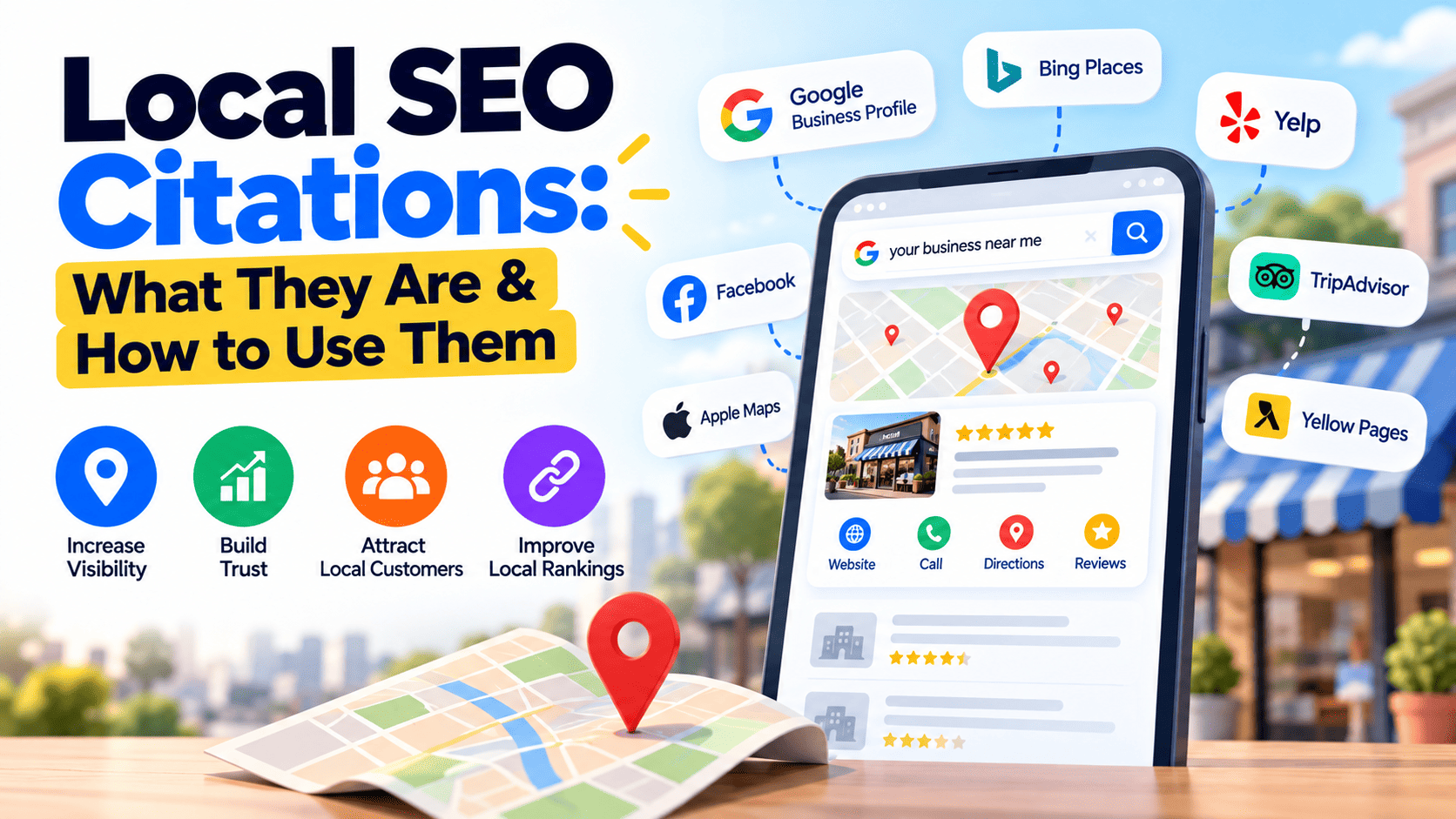
Local SEO Citations: What They Are & How to Use Them
A local SEO citation is any online mention of your business name, address and phone number (NAP), whether or not it links back to your website. Directory listings, social profiles, chamber of commerce pages and local news mentions all count.
That sounds small. It isn't. Search engines cross-check these mentions to decide whether your business is real, where it operates and whether they can trust the details they show to searchers. Get them right and you give Google a steady stream of confirmation. Get them wrong and you create doubt.
Structured vs Unstructured Citations
There are two types, and most businesses only think about the first.
Structured citations live in listings built for business data: Google Business Profile, Apple Business Connect, Bing Places, Yelp, Yellow Pages and industry directories. They have set fields for name, address, phone, hours and category.
Unstructured citations are mentions inside regular content: a local blog featuring your shop, a news story about a sponsorship, a community event page listing you as a partner. They're harder to earn, and they often carry more weight with real readers.
Why Citations Matter for Local Rankings
Google says local results are based mainly on relevance, distance and prominence. Citations feed the prominence and trust side of that picture. They won't rescue a weak Google Business Profile, and they won't beat a competitor with far better reviews. But inconsistent citations can quietly hold back a business that is doing everything else right.
They also help customers directly. Plenty of people find a business through a directory, an app or a map listing and never see your website first. If the phone number there is old, you've lost the lead before the conversation even starts.
NAP Consistency: The Part Everyone Gets Wrong
Consistency means your name, address and phone number appear the same way everywhere. Small differences add up.
Picture a Melbourne electrician listed as "Smith Electrical Pty Ltd" on one site, "Smith Electrical" on another and "Smiths Electric" on a third. Add "Suite 4, 12 High St" in one place and "12 High Street, Unit 4" in another, plus an old mobile number that was never removed. To a person, it's obviously the same business. To a search engine merging data from dozens of sources, it's messy.
Pick one exact version of your NAP and use it everywhere. Write it down. Share it with anyone who creates listings for you.
How to Build Local Citations Step by Step
- Settle your master NAP. Business name as it appears on signage and invoices, full address format, primary phone number and website URL.
- Audit what already exists. Search your business name, phone number and old addresses. You'll often find listings you didn't create, plus duplicates from previous owners or old premises.
- Claim the core platforms first. Google Business Profile, Apple Business Connect, Bing Places and Facebook. Fill in every field, including categories, hours and services.
- Add trusted local directories. For Australian businesses, that usually means Yellow Pages, True Local, Hotfrog and Localsearch, along with local council or chamber of commerce listings.
- Add industry-specific directories. A dentist, a cabinet maker and a software company each have different places where customers actually look. Quality beats quantity here.
- Earn unstructured mentions. Sponsor a local team, speak at an event, contribute a quote to a local publication. These take effort, but they build real authority.
- Recheck every few months. Aggregators and directories sometimes overwrite correct data with old data.
Cleaning Up Messy Citations
If you've moved, rebranded or changed numbers, cleanup comes before building anything new. Start with the listings that rank for your business name, since those are the ones customers see.
Update the information directly where you can. For duplicates, claim the listing and request removal or merge through the directory's own process. Don't just create a fresh listing on top of an old one, because that makes the duplicate problem worse.
Common Mistakes
- Using a tracking phone number on some listings and the main number on others, without a clear setup
- Putting a keyword into the business name field to try to rank better, which risks suspension on Google Business Profile
- Listing a virtual office or PO box as a physical address
- Submitting to hundreds of low-quality directories just to get a big number
- Forgetting to update listings after a move or a rebrand
Tools That Save Time
You can do all of this by hand, and for a single location that's often fine. Tools such as BrightLocal, Moz Local, Semrush and Whitespark help by scanning for existing listings, spotting inconsistencies and tracking changes across many locations. If you manage several branches or clients, a tool pays for itself quickly. For one location, a spreadsheet and a free afternoon can go a long way.
Final Thoughts
Citations aren't glamorous, but they're the groundwork for everything else in local SEO. Fix the basics first, keep them consistent, and then put your energy into reviews and content.
Need Help With Local SEO?
Eaglemount Technologies is a Melbourne-based digital agency helping businesses in Australia, Asia, Europe and North America grow online with SEO, web development and digital marketing. If your listings are messy or you're not sure where to start, we can audit them and put a clear plan in place.
Get Your Free Strategy Consultation
Prefer to talk directly? Call +61 420 596 268 or email info@eaglemounttechnologies.com.